
What Is the Best Season for Roof Replacement in Kearny?
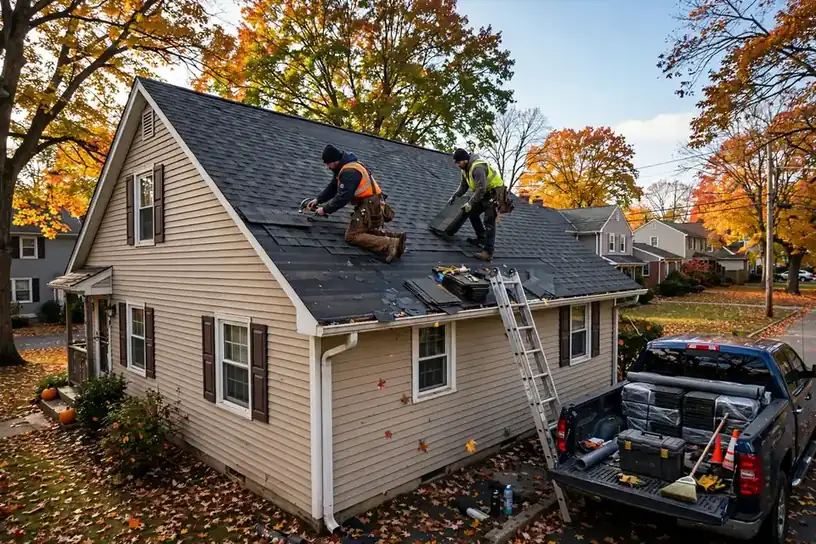
Every season has tradeoffs in Kearny. Here is an honest month-by-month look at when to schedule your replacement — and when to avoid it.
Spring and fall: the sweet spots
Mild temperatures, predictable weather, and shingles that seal quickly make spring and early fall the ideal windows in Kearny. Crews work efficiently, materials behave well, and scheduling is straightforward.
Summer: hot but workable
Summer's long days mean fast projects, but Kearny's heat demands early starts and careful material handling — shingles scuff more easily when baking. We schedule summer tear-offs for mornings and keep crews hydrated and shaded.
Winter: possible with planning
Winter replacements are entirely feasible here with the right planning: we watch forecasts closely, never tear off more than we can dry in daily, and use winter-grade installation practices. Off-season scheduling can also mean faster booking.
When timing matters most
Do not wait for the 'perfect' season if your roof is actively leaking — water damage costs dwarf any seasonal advantage. And if you are selling in spring, a winter replacement means listing with a brand-new roof.
Spring and fall: the sweet spots
Late spring and early fall are Kearny’s ideal roofing seasons: moderate temperatures keep shingle seal strips activating properly, crews work efficiently, and the storm calendar is relatively calm. Seal strips need sustained warmth to bond — that is the technical reason spring beats winter for shingles. Fall has the added advantage of getting the roof buttoned up before nor’easter season and the freeze-thaw cycles that punish marginal flashing.
Summer: fine, with caveats
Summer replacements are completely viable — hot days actually help shingles seal fast. The caveats: extreme heat softens shingles (crews adjust handling and nailing), afternoon thunderstorms can pause tear-off, and attic work is brutal. We schedule tear-off for mornings and keep a closer eye on the radar. If your roof is failing in July, waiting for October is worse than roofing in July.
Winter: possible, not preferred
Roofs get replaced in Kearny winters when they must — after storm damage or when a failing roof will not survive another freeze-thaw cycle. Cold-weather adjustments are real: shingles get hand-sealed where strips will not activate, ice-and-water shield and synthetic underlayment go down regardless of temperature, and we never tear off more than we can dry in the same short day. Emergency work does not wait for spring, and neither should an actively leaking roof. The worst season for roof replacement is the season you spend with water coming in.
Scheduling reality
Spring and fall book fastest — the sweet spots are also the busiest. If your roof has 2–3 years of life left, a fall inspection and spring scheduling is the relaxed path. If the signs from our 7 signs guide are showing now, call (888) 974-0663 and we will fit the season to the roof’s condition, not the calendar’s preference.
Bottom line: spring and fall are ideal, summer is fine with heat adjustments, and winter works when it must — but a failing roof should never wait for the "right" season. Water damage costs more than any seasonal advantage.
Whatever the season, the pre-project inspection is the same: photo-documented, free, and honest about how much time the roof has. If the roof can wait for spring, we will tell you; if it cannot, we will tell you that too — and our 24/7 emergency line means water intrusion never waits for business hours.
Related Services
Areas We Serve
Downtown Kearny
Roof replacement in Downtown Kearny, Kearny.
Arlington
Roof replacement in Arlington, Kearny.
More Guides
How Much Does Roof Replacement Cost in Kearny?
Guide from Roof Replacement Team.
7 Signs Your Kearny Home Needs a Roof Replacement
Guide from Roof Replacement Team.
Frequently Asked Questions
Can shingles be installed in cold weather?
Yes, with proper techniques — hand-sealing, careful handling, and attention to thermal sealing. Manufacturers publish cold-weather guidelines and we follow them.
How far out should I book?
Two to four weeks is typical in normal seasons; storm seasons and peak spring can push to six. The inspection itself is worth booking early regardless.
Do roofers work in the rain?
No — tear-off stops when rain threatens, and dried-in sections shed rain like a finished roof. We watch the radar on every job and never strip more than we can make watertight the same day. A roof that cannot be dried in does not get opened.